The creative industry is not for the faint of heart. If you have spent any significant time on a film set or in a high-pressure production environment, you know exactly what I am talking about. It is a world of unpredictable schedules, high-stakes deadlines, and a constant, low-humming pressure to perform at your absolute peak, every single day.
After 18 years on-set: navigating everything from Cinematography and DIT to complex Lab and Workflow roles on productions like Anansi Boys and Watchmen: I have seen the toll this environment takes. I’ve lived it. I know the feeling of the “always-on” culture and how easily it can erode your personal life and mental clarity.
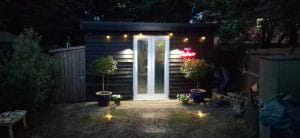
That is why I decided to build a sanctuary. Not just a room, but a dedicated space from the ground up. This wasn’t about home improvement; it was about mental health architecture.
The Reality of the “Always-On” Creative
In the creative industries, the line between “work” and “life” isn’t just blurred: it is often non-existent. When your passion is your profession, your brain doesn’t naturally “clock out.”
Without a physical and psychological boundary, your home becomes an extension of the set. Your kitchen table becomes a desk. Your bedroom becomes a place where you answer late-night emails. This lack of separation leads to chronic burnout and a diminished ability to actually be creative. You cannot innovate if you are constantly in survival mode.
I realized that to maintain my own standards of excellence: and to help others do the same: I needed a space that signaled a definitive shift in state.

01. The Blueprint: Deciding to Build
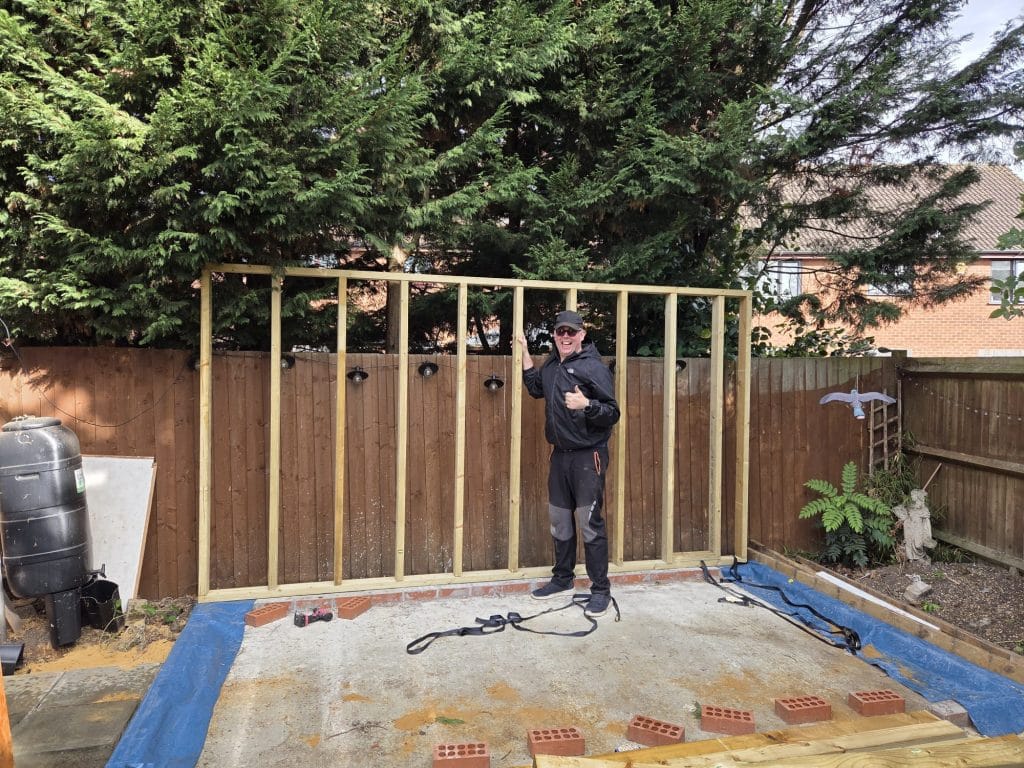
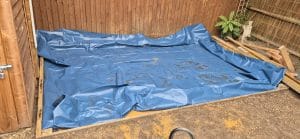
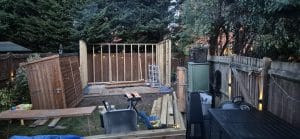
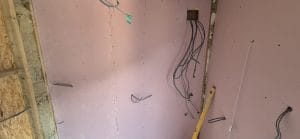
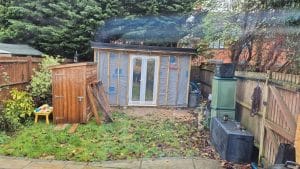
The project started with a simple, raw wooden frame. Looking at that initial decking, it was hard to see the finished “dream office.” It was just a skeleton.
This is exactly how coaching starts. When you come to me at Rushmind, you might feel like that raw frame: unfinished, perhaps a bit exposed, but with a solid foundation ready to be built upon.
Building your own space: whether it is a physical garden office or a mental framework for your career: requires a commitment to a vision. It is about saying, “My focus and my well-being are worth this effort.”
What a sanctuary is NOT:
- It is not a place to hide from responsibilities.
- It is not a luxury “man cave” or “she shed” meant for procrastination.
- It is not a magic fix that works without discipline.
It is a tool for professional sustainability.
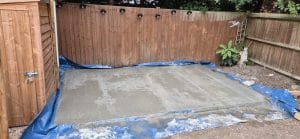
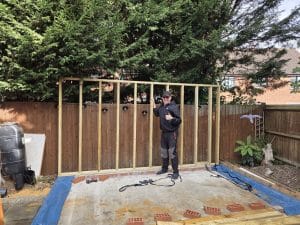
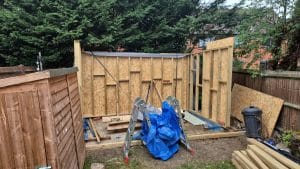
02. The Grit: From Decking to Structure
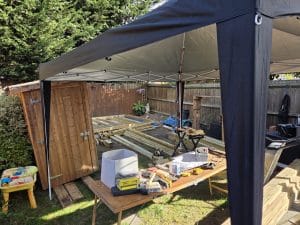
Building from scratch is brutal. It involves literal heavy lifting, navigating setbacks, and maintaining momentum when you are tired. In the film industry, we call this “the grind.”
During the build, I had to apply the same structured approach I use in my coaching services. You don’t just throw up walls; you follow a process.
- Preparation: You ensure the ground is level. In your career, this means clarifying your aspirations and identifying your success markers.
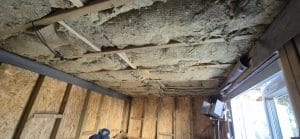
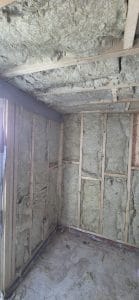
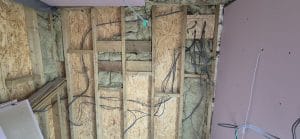
- Infrastructure: You run the cables and the insulation. This is your skill development: the technical and networking strategies that keep you running.
- Refinement: You finish the surfaces and install the lighting. This is the implementation phase, where we fine-tune your work-life balance and high-pressure performance.
Why a Physical Boundary is a Mental Health Power Move
Research consistently shows that a dedicated workspace is one of the most effective ways to reduce symptoms of anxiety and depression in freelancers and creative professionals. It provides several critical psychological benefits:
Psychological Anchoring
When you step into your dedicated office, your brain receives a signal: It is time to work. Conversely, when you close that door at the end of the day, you are signaling that work is done. This prevents “mental toggling”: that exhausting state where you are never fully working and never fully resting.
Creative Control
On a film set, you are often at the mercy of the director, the weather, or the equipment. Your sanctuary is the one place where you have total autonomy. This sense of control is a powerful antidote to the helplessness often felt in high-pressure industries.
Professional Identity
Working from a dedicated space reinforces your professional identity. It says that you take your work seriously enough to provide it with a home. This reduces the “imposter syndrome” that often plagues those in the creative arts.
The Rushmind Process: How We Build You
At Rushmind, I don’t believe in “fluffy” motivation. I believe in structure and results. My coaching process is designed to be as methodical as building that garden office. We don’t just talk; we execute.
01 | Discovery and Goal Setting
We start by stripping away the noise. We identify exactly what you want from your career in TV or film and what is currently standing in your way. We set actionable goals that serve as your blueprint.
02 | Skill Development and Strategy
Once we have the plan, we build the skills. This isn’t just about technical ability; it’s about navigating complex professional relationships, mastering networking, and developing the resilience needed to survive 14-hour days without losing your mind.
03 | Implementation and Support
This is where the walls go up. We focus on maintaining a healthy work-life balance and nurturing the relationships that matter outside of work. I provide ongoing support to ensure your “structure” stays solid under the weight of industry pressure.


The Commitment to the Vision
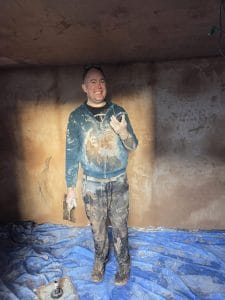
Building my office took time, sweat, and a refusal to settle for “good enough.” It was a commitment to my future self.
As a Coaching & Mental Health Service provider for the creative industries, I ask my clients to make that same commitment. You decide if you are ready to get unstuck. You decide if you are willing to do the work to build a career that doesn’t consume your life.
No pressure. If you aren’t ready to commit, I am not the coach for you. But if you are tired of the raw decking and ready for the finished sanctuary, then we have work to do.
Your First Step
Every project, no matter how ambitious, starts with a single action. For my office, it was the first piece of timber on the ground. For your career and mental health, it might be finally getting started with a professional who understands the industry from the inside out.
We will meet, I will listen to your needs, and we will set out a path. I will keep you accountable for 6 weeks, breaking down the belief systems that have kept you stuck.

What is one big goal you have been hesitant to start? The first step is waiting for you.
Whether it is building a physical space to house your creativity or a mental framework to protect your peace, the time to start is now. Don’t wait for the “perfect” moment: it doesn’t exist on a film set, and it doesn’t exist in life.
You decide.
To learn more about how I support professionals in the TV and film industry, check out my About page or read more about the importance of career coaching for creatives.